Seedbank data from across Australia is easier to access, search and visualise, thanks to updates to the Australian Virtual Seed Bank Portal.
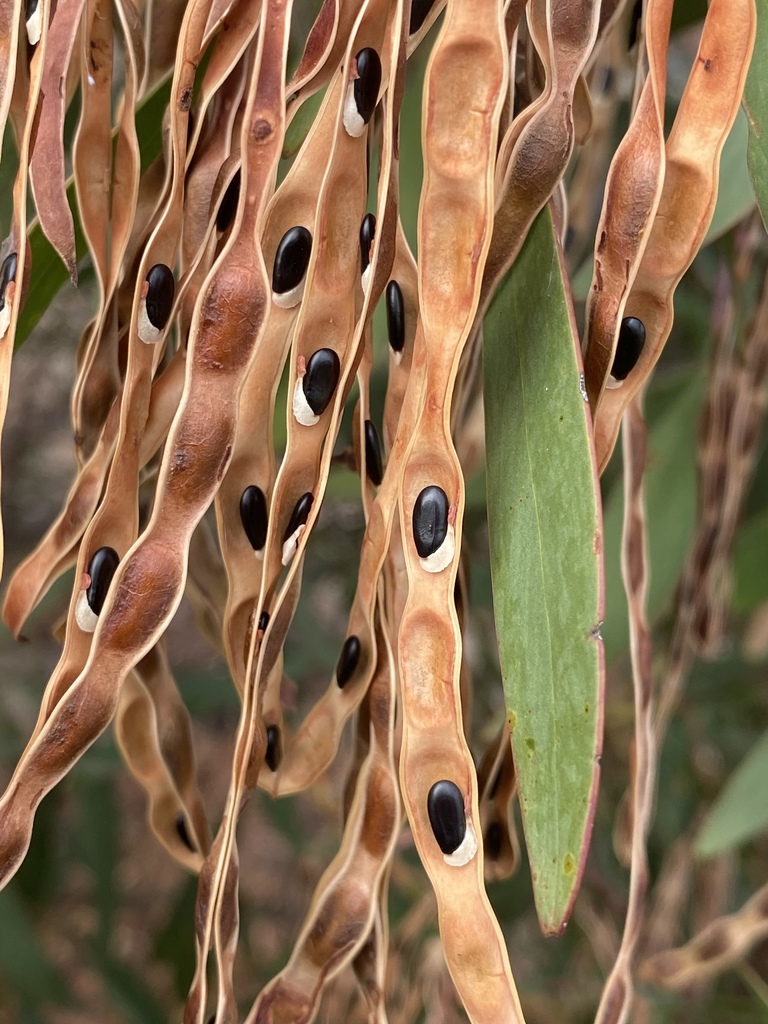
Built through a collaboration between the Australian Seed Bank Partnership (ASBP) and the Atlas of Living Australia (ALA) the portal is a shared online space showcasing the breadth of conservation seed collections held across the country.
It’s the first big refresh since the site launched in 2023 and makes the data much more interactive.
ALA Software Developer Jack Brinkman has been working on the seed bank portal project since he joined the ALA in 2022.
“It’s always fun working with the seed bank partners,” Jack said.
“In this cycle of the project, we were looking at two key features: a conservation lens on the statistics page, showing species listed under the national Environment Protection and Biodiversity Conservation Act 1999 (EPBC Act) and under relevant state legislation, and a new form of spatial querying.”
ALA Business and Policy Analyst Tania Laity said the improved functionality will allow seed banks to search the data in ways that are useful to them.
“We’re making this information open and available to the seed bank community as well as to the broader community,” Tania said.
“So if a student is researching a particular plant species, they’ll be able to see which seed banks hold that seed and find out about the specific conditions it needs to germinate.”
A snappy new snapshot page
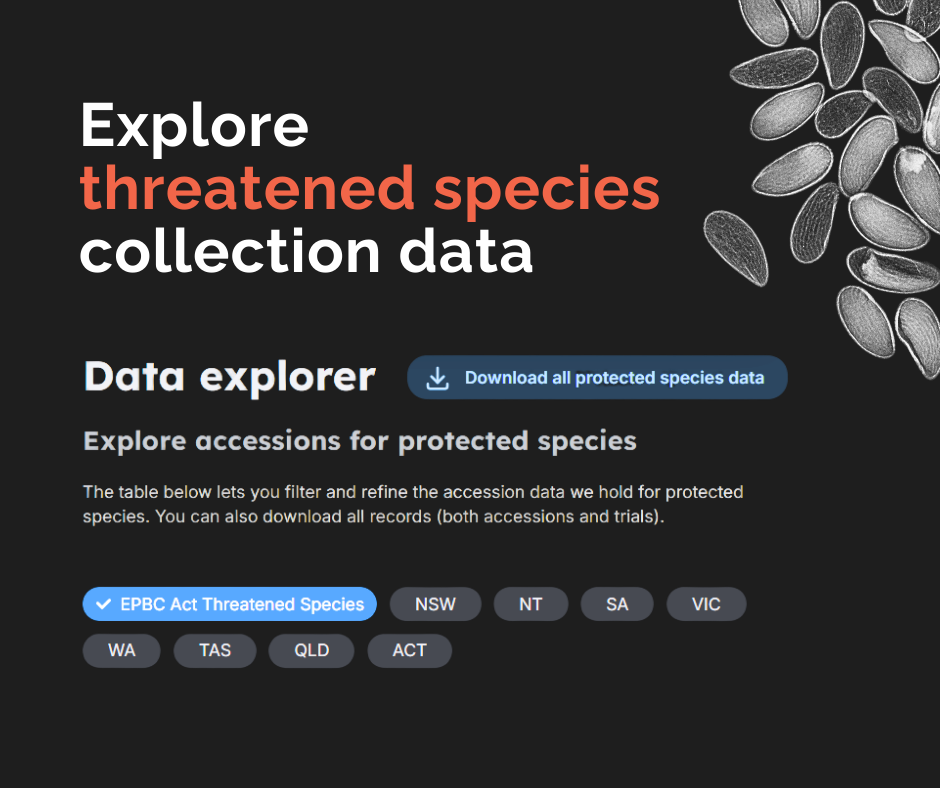
A new Seed Bank Snapshot page applies a conservation lens to seed bank records.
The new Data Explorer feature lets users drill down using filters to see which banked species are listed under the national EPBC Act and/or the relevant state legislation. This will provide crucial information against national and international plant conservation targets.
The snapshot page also allows users to download records of all threatened species, which wasn’t possible previously.
Map to it: seeds around Australia
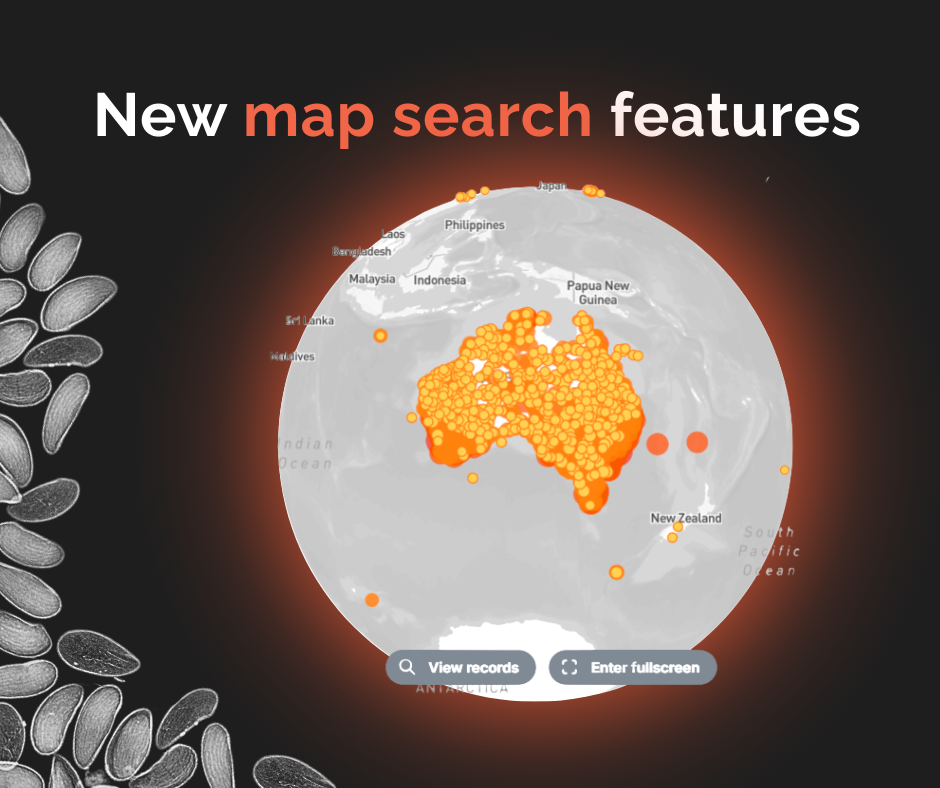
Another new feature is a searchable map showing where seeds were collected across the country. Users can now query and download records spatially using polygon-based area searches.
“One use case might be if a researcher is going out in the field to collect seed, then they can check which other species have been collected in that area,” Tania said.
“So they can get an idea of the timing of when seed sets and the best time to go out and collect seed, or check which species occur in that area that haven’t had seeds collected.”
A different type of record
The seed bank portal uses a different biodiversity record type than other ALA data. They’re event-based records rather than occurrence records, which just record which organism was seen where and when.
“The events model allows us to hierarchically nest a bunch of subsequent ‘events’ or information after the original entry showing where, when and by who the seeds were collected,” Jack said.
“It gives us not only the detailed data about the collection of the seed, but also what happened to the seed beyond that, at different points in time.”
These records show lots of extra linked information such as how much seed is stored, storage conditions, and tips for how to grow the seed based on previous trials. For example, some seeds need special treatments before they will germinate, such as smoke or heat treatment, or slicing through the tough outer seedcase (scarifying).
Ex-seeding expectations

In addition to the new features, this refresh also provides new data on species banked and germinated over the last year. This information will underpin critical research, environmental reporting, and evidence-based conservation of Australia’s native plant diversity.
“It’s about making seed bank data more interoperable and usable, and increasing our records in the ALA as well, so it’s a win-win,” Tania said.
Jack says the diverse breadth of biodiversity data knowledge across the ALA powered this project.
“It took many iterations to build this unique product that could capture the depth of this type of information, which led to the use of the event system,” Jack said.
“It was a relatively new way of deploying the website itself, and it was a very collaborative experience across ALA teams, such as the Data and Systems teams, which made it even more rewarding.
“When people ask me what I do for work, I often talk about the seed bank portal,” Jack said.
“The way I pitch it is that if we have an ecological disaster, such as major bushfires, and a bunch of our native plants are wiped out, the virtual seed bank shows all of the seed in seed banks across Australia, where and when it was collected, and what we know about germination.
“It’s a key resource which could help those looking to reestablish or conserve threatened populations.”
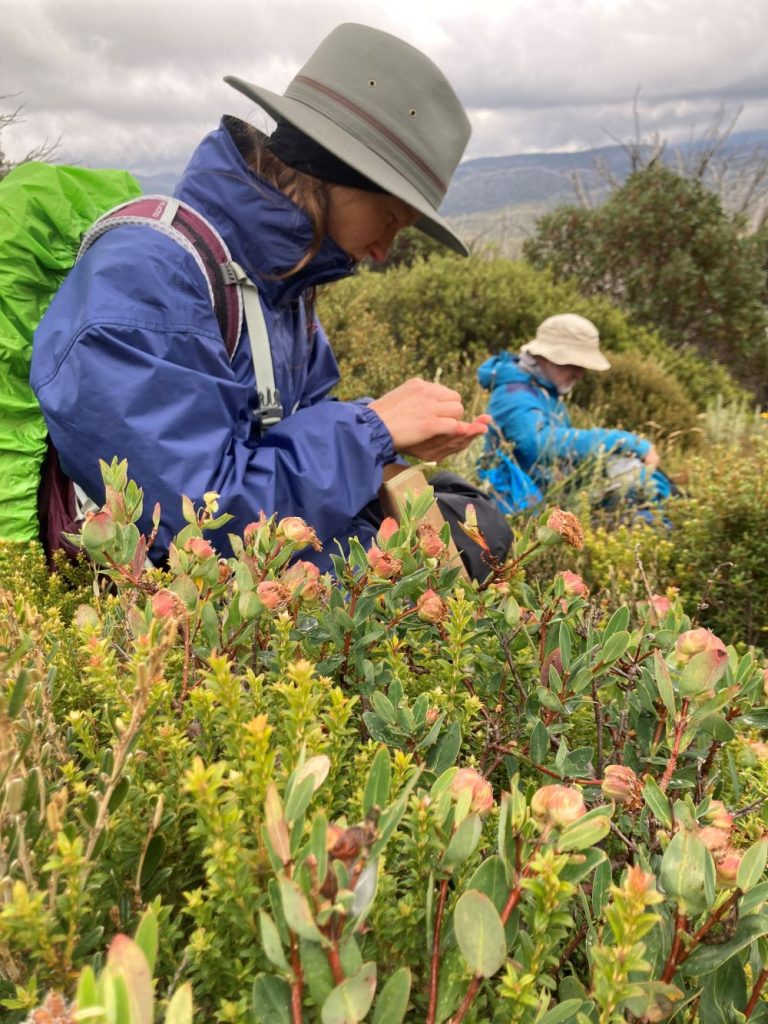
The Australian Seed Bank Partnership is an alliance of 16 organisations and growing. It includes 11 conservation seed banks at Australia’s leading botanic gardens, as well as state environment agencies, non-government organisations and the Millennium Seed Bank Partnership, Kew in the UK.
The Atlas of Living Australia (ALA) is a National Collaborative Research Infrastructure Strategy (NCRIS) research infrastructure, hosted by Australia’s national science agency, CSIRO, providing users with trusted biodiversity data services.