Today we’re celebrating International Day of Women and Girls in Science. Despite progress, women are still under-represented in science, technology, engineering and mathematics (STEM) disciplines all over the world. In 2022, just 31 per cent of researchers globally were women. And women make up only 35% of science graduates globally.
In Australia the proportion of STEM enrolments from women has remained stable at 37 per cent since 2020. Women remained underrepresented in enrolments and completions for engineering and IT. The proportion of women in STEM-qualified occupations has remained at 15 per cent from 2021 to 2024, compared to 50 per cent in non-STEM occupations. Find out more in the STEM Equity Monitor.
We asked ALA team members to share their stories about a woman in science they find inspiring.
Purnima Devi Barman
By Shandiya Balasubramaniam, Decision Support Program Lead
Dr Purnima Devi Barman is a wildlife conservation biologist from Assam, India, whose work has transformed how communities care for one of the world’s most threatened birds, the greater adjutant stork (Leptoptilos dubius). Locally known as the hargila, these birds were once considered bad omens, and it was common for nesting trees to be cut down and nests destroyed.
Dr Barman worked directly with women in the local communities to change perceptions of the stork, offering an alternative image of these birds as symbols of joy. She engaged women to incorporate stork motifs into the fabrics they were already weaving, hoping to create an appreciation for these birds. This grew into multiple small businesses producing textiles, clothing, and artworks featuring the stork, many of which are now sold internationally. Alongside raising the profile of the stork globally, this work has led to the establishment of sewing schools locally, providing training, income, and new vocational opportunities for women.
At the heart of this effort is the Hargila Army, an all-women conservation network founded by Dr Barman that has been central to the stork’s recovery. Now comprising more than 20,000 women across over 40 villages, the Hargila Army protects nesting trees, rescues injured birds, and celebrates the stork through festivals, songs, and traditional weaving. Through this community-led approach, people’s sense of stewardship of the species has grown and the hargila is now proudly celebrated.
This inspirational campaign shows the power of a multi-pronged approach to conservation, combining ecological management with art, design, and culture to holistically support the long-term conservation of a species. Dr Barman’s work has been internationally recognised through numerous awards, such as the Whitley Gold Award and the UN Champion of the Earth Award, and more recently in 2025 she was named one of TIME’s Women of the Year.
Lucyna Kania
By Juliet Seers, Training and Outreach Coordinator
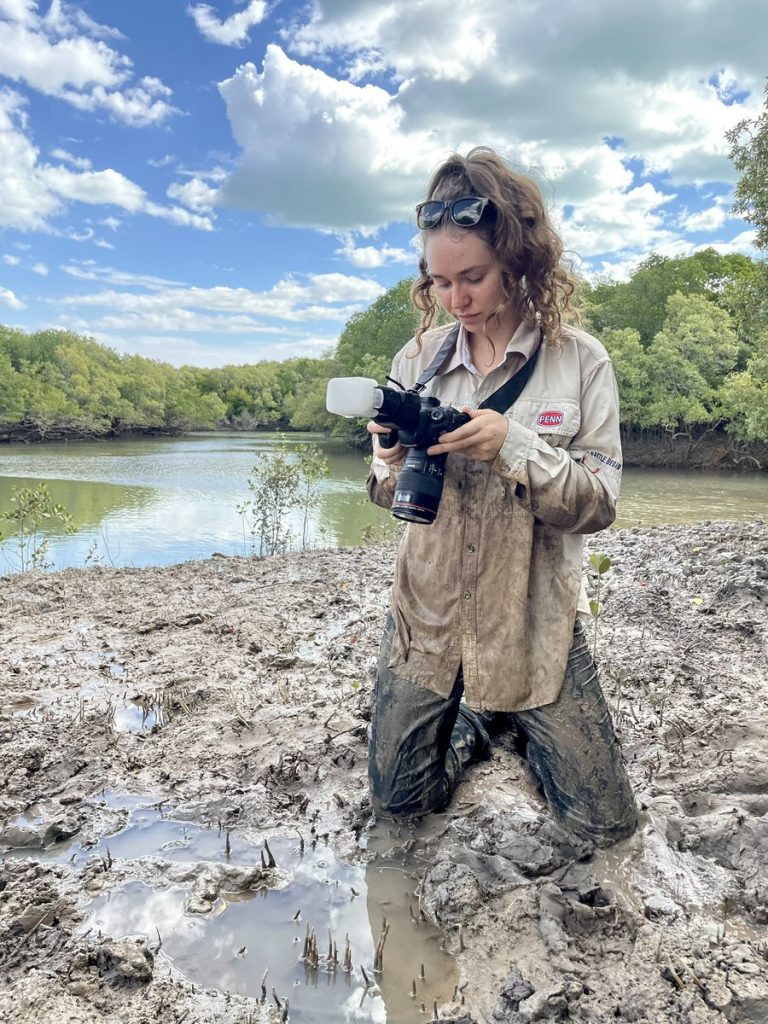
Lucy is inspiring because she shows that science doesn’t have to be tied only to journals or university settings to matter. As a wildlife ecologist and photographer, she brings attention to insects and other invertebrates that are critical to how ecosystems function but rarely get public attention.
For example, through her role in the discovery of a new species of ghost wasp in the Northern Territory, the Mam-Burrumurl wasp (Gasteruption mamburrumurl). Lucy was one of the individuals who first found the wasp in the field (which was later formally described by Ben Parslow from the South Australian Museum).
Importantly, she worked closely with Jawoyn Traditional Owners to help develop a culturally appropriate name using traditional language, this shows how science can be respectful and inclusive. Lucy makes a real effort to demonstrate that every species has a story worth telling.
Her impact also comes from expanding what a career in science can look like, and who it can reach. Lucy has contributed to major public-facing projects, including filming for Netflix’s Our Great National Parks in Kakadu, partnering with ABC Science and ABC Darwin to highlight unique Top End species, and co-curating the MAGNT exhibition Tiny Territory with her partner Nick Volpe, celebrating the region’s extraordinary insect life. These projects show that influencing how people value biodiversity often happens through storytelling and imagery, not data alone.
Currently through her work at the Manu Bio Station in Peru, Lucy continues to collaborate with local communities to survey and document biodiversity in one of the most species-rich places on Earth. For people early in their careers, or those who don’t fit the traditional academic mould, her work is a clear reminder that there are many ways to belong in science, and that real change happens when research connects with people.
Judith Love Cohen
By Kylie Morrow, Digital Product Specialist
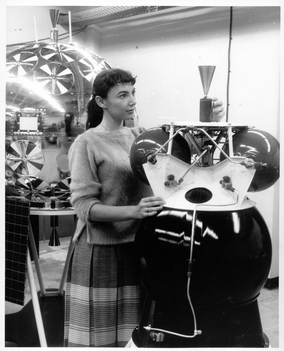

Judith Love Cohen (1933-2016) was an aerospace engineer whose determination to pursue mathematics and engineering in the 1950s and 60s led to contributions that saved lives on the Apollo 13 space mission. Thankfully, Cohen ignored her high school guidance counsellor’s advice to attend “a nice finishing school and learn to be a lady”, and instead pursued her childhood dream to reach for the stars.
Even in primary school, Cohen was talented at mathematics – classmates were paying her to complete their maths homework for them. Fast forwarding to university, Cohen initially studied mathematics before earning her bachelor’s and master’s degrees in electrical engineering from USC.
After graduation, Cohen joined Space Technology Laboratories (later TRW) where she worked on the Abort-Guidance System for the Apollo Lunar Excursion Module. This backup navigation system was designed to take over in an emergency, and in April 1970, it did exactly that, guiding the Apollo 13 astronauts safely back to Earth.
Cohen’s dedication to her work was extraordinary. Famously, on August 28, 1969, while in labour with her fourth child, she stopped by her office to collect a computer printout of a problem she’d been working on. Later that day, she called her boss from the hospital to report she’d solved the problem… and also gave birth to a healthy baby – who would grow up to be the famous actor and musician, Jack Black!
Beyond Apollo, Cohen worked on the Tracking and Data Relay System Satellite, which operated in orbit for nearly 40 years, and led systems engineering for the science ground facility of the Hubble Space Telescope.
Throughout her career, Cohen was a strong advocate for inclusion and equality in the workplace, and after retiring from engineering in the 1990s, she continued this legacy, authoring “You Can Be a Woman Engineer” and co-publishing over 20 books encouraging girls to pursue careers in science, technology, and other non-traditional fields.